How Does Your Dentist Diagnose Cavities?
Posted on 2/16/2026 by Singing River Dentistry - Florence |
 Ever wondered how your dentist knows you have a cavity? It’s not just about looking for a dark spot! Diagnosing cavities is a multi-faceted process that involves a dentist's expertise and modern technology to ensure the best possible oral care. Let's explore what goes on during your dental exam when your dentist is checking for tooth decay. Ever wondered how your dentist knows you have a cavity? It’s not just about looking for a dark spot! Diagnosing cavities is a multi-faceted process that involves a dentist's expertise and modern technology to ensure the best possible oral care. Let's explore what goes on during your dental exam when your dentist is checking for tooth decay.
Visual Examination: The First Look
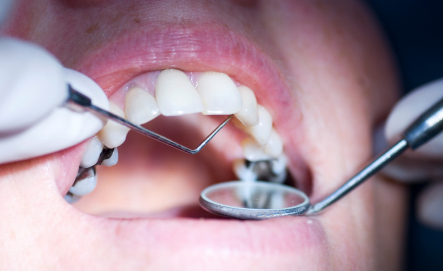
The first step in diagnosing cavities is a thorough visual examination. Your dentist will use a bright light and a small mirror to carefully inspect all surfaces of your teeth. They're looking for changes in color, texture, or any visible holes. While some cavities are easy to spot, especially those on the chewing surfaces of molars, others can be hidden in between teeth or in hard-to-reach areas.
Exploring with Instruments
Sometimes, a visual exam isn't enough. Your dentist will use a special instrument called an explorer, a thin, hooked tool, to gently probe the surfaces of your teeth. A healthy tooth surface is smooth and hard. If the explorer catches or feels sticky in a particular spot, it could indicate a softened area of enamel, which is an early sign of decay. However, dentists are now very careful about using explorers forcefully, as overly aggressive probing can actually damage a weakened enamel surface.
Radiographic Examination: X-Ray Vision
X-rays, also known as radiographs, are a crucial part of diagnosing cavities, especially those lurking between teeth or beneath existing fillings. These images allow your dentist to see areas that aren't visible during a regular visual exam. Different types of X-rays are used, such as bitewing X-rays, which focus on the crowns of your teeth, and periapical X-rays, which show the entire tooth, from crown to root. X-rays can reveal the size and location of cavities, as well as any potential problems with the tooth's roots or surrounding bone. The amount of radiation exposure from dental X-rays is very low and considered safe.
Advanced Technology: Beyond the Basics
In addition to traditional methods, some dental offices use advanced technologies to detect cavities earlier and more accurately. These may include:
| • |
Laser Cavity Detection: This technology uses a low-powered laser to measure the density of tooth structure. Decayed areas will have a different density than healthy enamel, allowing the device to identify potential problems. |
| • |
Digital Radiography: Digital X-rays offer several advantages over traditional film X-rays. They require less radiation, produce images instantly, and can be easily enhanced for better visualization. |
| • |
Transillumination: This technique uses a bright light to shine through the teeth, making it easier to see cracks and decay that might otherwise be missed. |
The Importance of Early Detection
The earlier a cavity is diagnosed, the easier and less invasive the treatment will be. Small cavities can sometimes be treated with fluoride varnish to help remineralize the enamel and prevent further decay. Larger cavities may require a filling, inlay, onlay, or crown, which are all part of restoration dentistry. Regular dental check-ups, combined with good oral care habits at home, are essential for preventing cavities and maintaining a healthy smile. Brushing twice a day, flossing daily, and limiting sugary foods and drinks are all important steps you can take to protect your teeth. Your dentist will work with you to create a personalized oral care plan to keep your smile healthy for years to come.
|
|

