How Long Should Tooth Sensitivity Last After Dental Work?
Posted on 10/6/2026 by Singing River Dentistry - Florence |
 Tooth sensitivity after dental work is one of the most common questions our team hears at our Florence, AL office, and the honest answer is that the post-dental sensitivity duration depends on what was done and how close the procedure was to the nerve. A few days of cold or pressure reactivity after a filling or crown is usually normal and resolves on its own. The harder question for patients is when “normal” tips over into something a dentist should look at again.
This guide walks through how long sensitivity typically lasts after the most common dental procedures, including fillings, crowns, professional cleanings, whitening, and root canals. We’ll also cover what tends to help sensitivity settle down at home and the warning signs that mean it’s time to come back in. If you already know your sensitivity is dragging on longer than it should, our team offers focused treatment for sensitive teeth for patients across the Shoals.
On This Page
Why Sensitivity Happens After Dental Work
When we work on a tooth, even gently, we’re asking it to recover from a controlled disturbance. The outer enamel is essentially insensitive, but the layer beneath it (the dentin) is full of microscopic tubules that carry stimulation toward the pulp, where the nerve lives. Anything that exposes, vibrates, or briefly inflames the pulp can leave a tooth feeling more reactive for a while afterward.
That irritation is part of normal healing and almost always temporary. The closer the work was to the nerve, the longer the recovery tends to take. A small filling in the outer enamel may produce barely any sensitivity, while a deep filling near the pulp can take several weeks to fully calm down. The same is true for crowns, root canals, and cleanings that involve deeper instrumentation.
The pattern to remember: sensitivity should be steadily improving day by day. It can have small flare-ups, especially with cold drinks or biting on something firm, but the overall trend should be downward. Sensitivity that worsens, sharpens, or starts throbbing is the part that’s worth a phone call.
How Long Sensitivity Lasts After a Filling
Mild reactivity to cold, sweet flavors, or pressure is one of the most common after-effects of a new dental filling. For a routine, shallow filling, that sensitivity usually fades within a few days to about two weeks. Cold sensitivity typically dulls first, while pressure sensitivity (a slight twinge when you bite directly on the tooth) can hang around a little longer.
Deeper fillings, the ones that reach close to the nerve, often take longer to settle: anywhere from two weeks to a couple of months in some cases. We sometimes describe this as the tooth needing time to build up an extra protective layer of dentin between the filling and the nerve, which is part of the tooth’s natural repair process. As long as the sensitivity is steadily improving, that healing is on track.
One important note: if a new filling feels high when you bite down (almost like it’s the first surface your teeth touch) that’s usually a bite adjustment issue rather than nerve sensitivity. It’s a quick fix in the office. We polish off a microscopic amount of filling material, and the pressure on the nerve eases almost immediately.
How Long Sensitivity Lasts After a Crown
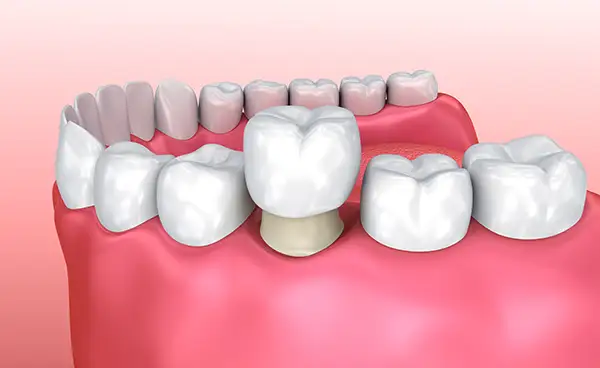 Sensitivity after a dental crown is also common and usually peaks in the first week before easing over the next two to four weeks. Because a crown requires shaping the underlying tooth structure, the nerve inside that tooth often takes longer to quiet down than it does after a smaller filling.
Cold reactivity is the most typical complaint and tends to fade on its own. Sensitivity when biting, especially if it shows up on a specific spot, is more often a sign that the crown’s bite needs a small adjustment. Our team can usually correct this in a short visit by checking the contact between the crown and the opposing teeth and refining the surface where it’s slightly too tall.
If sensitivity after a crown gets worse over time rather than better, or if the tooth develops a lingering ache that doesn’t fade within 30 seconds to a minute of a cold stimulus, that can suggest the nerve inside the crowned tooth is struggling. In a small percentage of cases, a crowned tooth eventually needs a root canal to fully resolve the issue, even after a perfectly placed crown.
Sensitivity After Cleanings, Whitening, and Root Canals
Sensitivity isn’t limited to restorations. A few of the other procedures we routinely perform also come with a brief post-procedure sensitivity window.
After a routine professional cleaning, it’s common to notice mild cold reactivity or tender gums for a day or two. The sensitivity is more pronounced after deeper cleanings on patients with gum disease, where some root surfaces are temporarily exposed as inflamed tissue heals back tightly against the teeth. That sensitivity typically fades within several days to a couple of weeks.
After professional teeth whitening, sensitivity is the most predictable side effect. It usually peaks within the first 24 to 48 hours after treatment and resolves within a few days. The fluoride and potassium-nitrate products we use during and after whitening are designed to shorten that window.
A root canal can leave a tooth tender to chewing for a few days to a couple of weeks, even though the nerve inside the tooth has been removed. The soreness comes from the surrounding ligament and bone, which were inflamed before treatment and need time to settle. Tenderness should taper steadily; sharp returning sensitivity weeks or months later is the part to flag with us.
How to Ease Sensitivity at Home
A few simple habits help most patients move through the sensitivity window more comfortably while their tooth heals.
| • |
Use a desensitizing toothpaste - Products containing potassium nitrate or stannous fluoride work over a couple of weeks by calming the nerve response or sealing the tubules in dentin. Daily use, twice a day, gives the best result.
|
| • |
Soften your diet briefly - Stick to lukewarm and soft foods for the first few days after deeper work. Skip extremely cold drinks, ice, and crunchy items directly on the treated tooth.
|
| • |
Brush gently with a soft-bristled brush - Aggressive brushing on a recently treated tooth can prolong sensitivity. A soft brush and a light touch are enough.
|
| • |
Avoid acidic drinks for a few days - Citrus juice, sodas, and sparkling waters soften dentin temporarily and can stretch out the sensitivity window.
|
| • |
Give it time - Most post-procedure sensitivity is on a clear downward slope by the end of week one. If yours is, you’re likely on track. |
Over-the-counter discomfort relievers used as directed for the first day or two after deeper work are also fine for most patients. If you’re unsure whether something is safe given your medical history, your dentist or pharmacist can confirm.
When Sensitivity Means It’s Time to Call
The biggest takeaway from this guide is that sensitivity should be improving, not worsening. A few clear signals mean it’s worth being re-evaluated:
| • |
Sensitivity that gets sharper or more frequent instead of fading day by day
|
| • |
A lingering ache that doesn’t settle within 30 seconds to a minute of a cold stimulus
|
| • |
A sharp twinge when biting on one specific spot
|
| • |
Swelling or a bad taste near the treated tooth
|
| • |
Sensitivity that hasn’t meaningfully improved after four to six weeks |
Most of the time the fix is straightforward: a bite adjustment, an additional desensitizing treatment, or a check of the original restoration if a margin has worn or loosened. Catching these things early is usually quicker and easier than letting them escalate, and most of the issues we evaluate in our Florence office turn out to be small adjustments that resolve quickly once the cause is identified.
Getting Back to Comfortable Chewing
If your sensitivity is taking longer than expected, or you simply want a second set of eyes on it, our team in Florence is glad to take a look. We’ll evaluate the tooth, check the bite, and walk you through the next step. Call us at 256-764-9955 or get in touch through our home page to find a time that works.
Frequently Asked Questions
Is sensitivity after a deep filling normal even if it’s been a few weeks?
Yes, sensitivity after a deep filling can be normal for up to two months in some cases, especially if the original cavity was close to the nerve. What matters most is the trend. If the sensitivity is steadily improving, even slowly, the tooth is likely on track to heal. If it has plateaued at the same intensity or is getting worse, that’s the point to come back in for a check.
Why is my crown still sensitive months after it was placed?
Cold sensitivity that lingers months after a crown is uncommon and can have a few explanations. The most common is a nerve that was more inflamed than expected before the crown was placed and is still settling down. A bite that’s slightly high can also keep a crowned tooth chronically sore. In a smaller number of cases, the nerve inside the crown doesn’t fully recover and the tooth eventually needs a root canal. A short visit lets us check each of these and identify what’s actually happening.
Can a professional cleaning cause long-term sensitivity?
Routine cleanings don’t cause lasting sensitivity. Mild reactivity for a day or two, especially after a deeper cleaning, is normal and fades quickly. If sensitivity persists more than two weeks after a cleaning, it usually points to receding gums or exposed root surfaces rather than the cleaning itself, and both respond well to desensitizing toothpaste and a fluoride treatment.
Does whitening sensitivity mean I’m damaging my teeth?
No, whitening sensitivity isn’t a sign of damage. The peroxide in whitening products temporarily increases the permeability of dentin, which lets stimulation reach the nerve more easily for a few days. The effect is reversible, and the structure of enamel and dentin returns to normal once the sensitivity fades. Using a desensitizing toothpaste in the days before and after whitening shortens the window even further.
How can I tell normal post-procedure sensitivity from something more serious?
The clearest marker is the direction of the sensitivity over time. Normal sensitivity improves day by day, even with small flare-ups. Sensitivity that gets sharper, more frequent, or starts producing a lingering ache after a cold stimulus has gone beyond the typical post-procedure window. A sharp twinge that’s clearly tied to biting on one specific spot is also worth flagging, since it often points to a high bite that’s easy to adjust.
|
|

